Tsipouro is the spirit Greeks actually drink with each other. Ouzo gets the postcards, but on a taverna table in the Peloponnese the small chilled glass beside the meze is far more often tsipouro, a clear grape distillate that has been made in this country since the monasteries of Mount Athos in the 1300s. This guide explains what it is, how it differs from ouzo and raki, how to drink it the way Greeks do, and which plates to order alongside it. In Stoupa the natural place for the lesson is Liastres, the traditional Greek restaurant on Tampoureas street, where the Mani meze that tsipouro was made for are already on the menu.
Key takeaways
- Tsipouro is a pomace brandy distilled from grape skins and stems after winemaking, usually 40 to 45 percent alcohol, with no anise in its classic form.
- Ouzo is anise-flavoured neutral spirit; raki or tsikoudia is Crete’s version of tsipouro. Tsipouro with anise exists but is the exception.
- Greeks drink it cold, in small glasses, slowly, and always with meze. A small carafe for two over an hour is the normal pace.
- The best Mani meze for it: syglino smoked pork, sfela cheese, lalagia, olives, tomato salad with local oil, and small fish from the gulf.
- Aged tsipouro from oak barrels is golden and softer, worth ordering after dinner.
- At Liastres in Stoupa the local wines and spirits list is the place to ask for it, with the meze plates made for sharing.
What tsipouro actually is
When grapes are pressed for wine, what remains is the pomace: skins, seeds, stems and a little juice. Greek farmers have fermented and distilled that leftover for centuries, and the result is tsipouro. It belongs to the same family as Italian grappa and it is essentially the same drink as the tsikoudia or raki of Crete, just made on the mainland and in the Peloponnese. The traditional method is a double distillation in a copper still, and the first written records come from the monks of Mount Athos in the 14th century, who made it for themselves and for the pilgrims.
Classic tsipouro has no added flavouring. It is clear, dry and tastes of grape, with a warmth and a slightly peppery finish. Most bottled tsipouro is 40 to 45 percent alcohol by volume, and the tsipouro that a village family distils for itself can be higher. Two things changed its image in the last twenty years: the rise of the tsipouradiko, the small taverna where you order tsipouro by the 200 ml carafe and the kitchen sends meze automatically, and the arrival of aged tsipouro, rested in oak barrels until it turns golden and picks up notes of vanilla, honey and dried fruit. The aged version is drunk after dinner, the clear one with the meze.
Tsipouro, ouzo and raki: the differences that matter
The confusion is understandable, since all three arrive in the same small glasses. The differences are real:
- Tsipouro: distilled from grape pomace. Plain, no anise, tastes of grape. A version with a little anise exists, mostly in northern Greece, and tastes softer and sweeter.
- Ouzo: neutral alcohol redistilled with anise and other botanicals such as fennel, coriander and mastic. Protected name since 2006, only Greece and Cyprus may use it. Turns milky white when water or ice is added, which plain tsipouro does not.
- Raki or tsikoudia: the Cretan pomace spirit, usually distilled once and often a little lighter and rougher than tsipouro. In Turkey raki means an anise spirit, which adds to the mix-up.
A simple test: add ice. If the glass clouds over, it is ouzo or anise tsipouro. If it stays clear, it is plain tsipouro or raki. As for strength, tsipouro is usually slightly higher in alcohol than ouzo, but because it is sipped with food over a long hour it rarely feels that way.
How Greeks drink it
Slowly, cold and never alone. The bottle or the small carafe comes from the fridge or the freezer. It is poured a finger at a time into short glasses, sometimes over a cube or two of ice, and each sip is followed by a bite of something salty or oily from the table. The pace is the whole point. A 200 ml carafe shared by two people lasts an hour of conversation, and the meze keep arriving in small waves so that nobody is drinking on an empty stomach. Order a second carafe rather than a large one; it stays colder that way.
Two things not to do. Do not knock it back as a shot, which is a tourist habit that makes Greeks wince and gets you drunk before the food arrives. And do not add water to plain tsipouro expecting the ouzo cloud; it simply dilutes it. If you want the softer, milky version, ask for the one with anise.
The meze that go with it
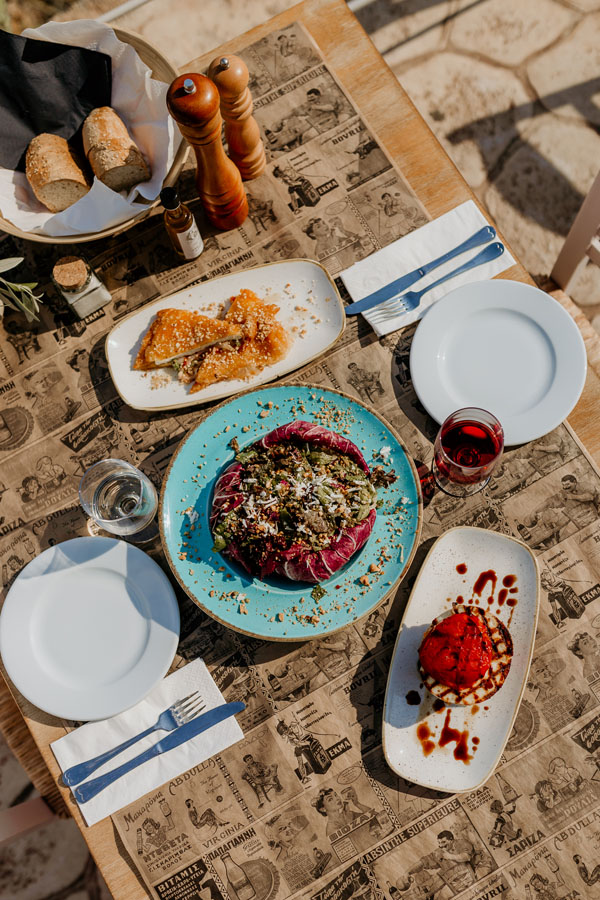
Meze are small plates built for sharing, and the rule for pairing them with tsipouro is salt, fat and acidity. In the Mani the classic spread writes itself, and most of it is exactly what our guide to Mani cuisine tells you to eat anyway:
- Syglino: pork preserved in its own fat and smoked over mountain herbs, sliced thin. The single best partner for a clear tsipouro.
- Sfela: Messinia’s own brined cheese, firm and salty, protected origin. A cube of sfela and a sip of tsipouro is the two-bite version of the whole peninsula.
- Lalagia: ribbons of dough fried in olive oil, eaten plain or with a drizzle of honey. Their crunch resets the palate.
- Olives and tomato salad: Kalamata olives from the groves behind the village, tomatoes with local oil and oregano. The acidity keeps the spirit from feeling heavy.
- Something from the sea: small fried fish, grilled octopus or a plate of marinated anchovies when the boats have been out. Tsipouro and fish is the pairing the tsipouradika of Volos built their name on.
- Kayianas: eggs cooked down with tomato and often syglino, a Mani dish that works as a late meze as well as it works for lunch.
Order three or four plates for two people, then add as you go. Meze are meant to keep pace with the carafe, not to arrive all at once.
Where to do it in Stoupa
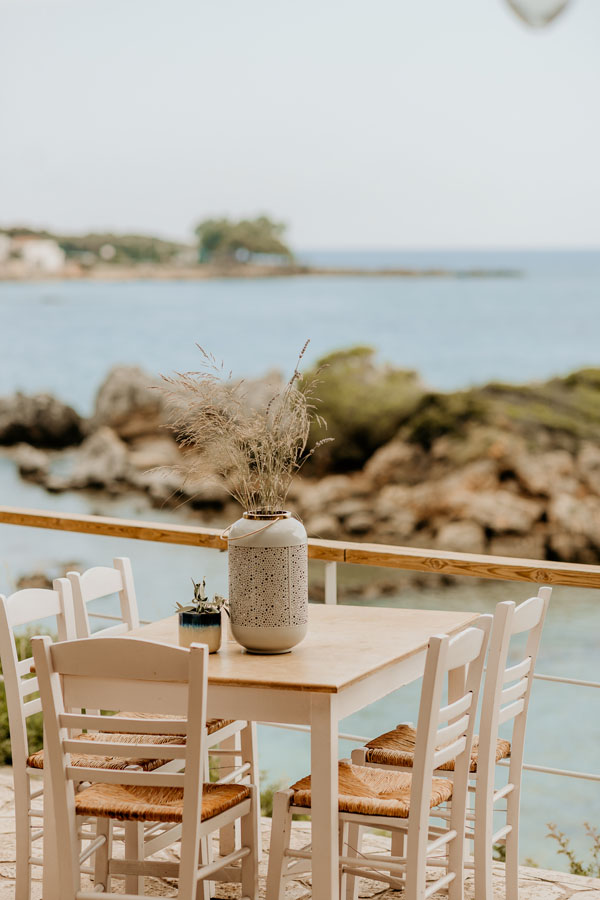
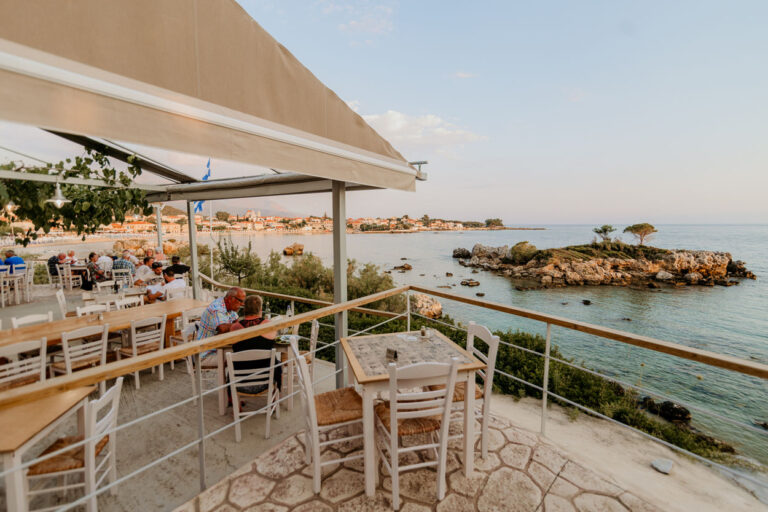
Liastres, the traditional Greek restaurant in Stoupa, is on Tampoureas street on the headland at the edge of the bay, family-run, with a menu rooted in Mani recipes: syglino, lalagia, goat in the oven, fresh fish from the Messenian gulf, handmade pies and salads from the gardens above the village, plus a list of local wines and spirits. Portions are made for sharing, which is exactly how a tsipouro evening should be eaten. Ask for tsipouro when you order, tell them plain or with anise, and let the kitchen set the pace. The terrace looks straight out over the gulf, so an early evening carafe lines up with the sunset.
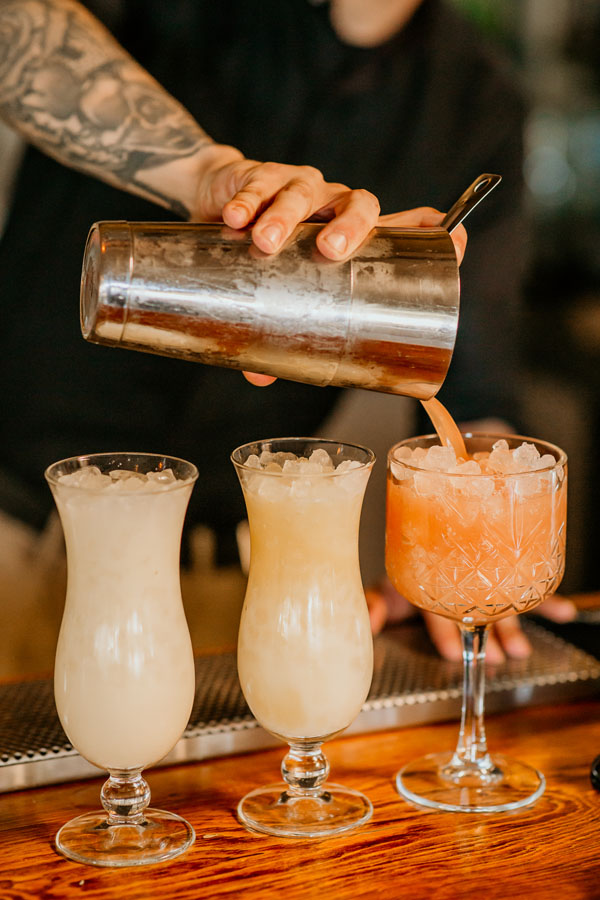
If you would rather start with something cold and bright, Enigma, the cafe and cocktail bar 40 metres along the same street, turns the same Greek spirits into cocktails; our guide to sunset cocktails and Greek spirits explains how. And the next morning, a Greek coffee on the Enigma terrace is the traditional cure.
Practical notes
- Order by the 200 ml carafe, chilled, plain (horis glykaniso) or with anise (me glykaniso).
- Small glasses, ice optional, sip between bites. Never as a shot, never on an empty stomach.
- Meze order for two: syglino, sfela, lalagia, a salad, one plate from the sea. Add as you go.
- Aged tsipouro: golden, oak-rested, drink it neat after dinner instead of a dessert wine.
- In Stoupa: Liastres on Tampoureas street, lunch and dinner, terrace over the gulf. Book a table for sunset in July and August.
Tsipouro questions people ask
Is tsipouro the same as ouzo?+
No. Tsipouro is a pomace brandy distilled from the grape skins and stems left after winemaking, and in its classic form it has no anise at all. Ouzo is made from neutral alcohol flavoured with anise and other botanicals, which is why it turns cloudy with water. Some tsipouro is made with a little anise, but plain tsipouro tastes of grape, not liquorice.
What does tsipouro taste like?+
Plain tsipouro is clean and warming with a clear grape character, a touch of pepper and a dry finish, closer to grappa than to any anise spirit. Aged tsipouro, rested in oak barrels, picks up vanilla and dried fruit and turns golden. Tsipouro with anise sits between the two worlds, softer and slightly sweet.
How do you drink tsipouro?+
Cold, in small glasses, slowly, and always with food. Greeks pour a small measure over a cube or two of ice, or drink it neat from a chilled bottle, and take a sip between bites of meze. A 200 ml carafe shared by two people over an hour of small plates is the normal pace. Nobody drinks tsipouro as a shot.
Is tsipouro stronger than ouzo?+
Usually a little. Most commercial tsipouro is bottled at 40 to 45 percent alcohol, and village distillations can be higher, while ouzo is typically 37.5 to 40 percent. The real difference is in how it is drunk: with meze and time, tsipouro feels gentler than the numbers suggest.
What type of alcohol is tsipouro?+
It is a grape pomace spirit, a member of the same family as Italian grappa and Cretan tsikoudia or raki. After the grapes are pressed for wine, the skins, seeds and stems are fermented and distilled, traditionally twice in copper stills. It has been made in Greek monasteries since at least the 14th century.
What is a typical Greek meze?+
Meze are small plates meant for sharing over drinks: olives, cheese, a dip or two, something fried, something cured and something from the sea. In the Mani a typical spread would be syglino (smoked pork), sfela cheese, lalagia (fried dough ribbons), a tomato salad with local olive oil, and small fish or octopus when the boats have been out.
Is there a tsipouro without anise?+
Yes, and it is the original style. Most tsipouro from Thessaly, Macedonia and the Peloponnese is distilled without anise and tastes purely of grape. Tsipouro with anise is a regional variation, popular in parts of northern Greece. If you want the clean version, ask for tsipouro horis glykaniso, meaning without anise.